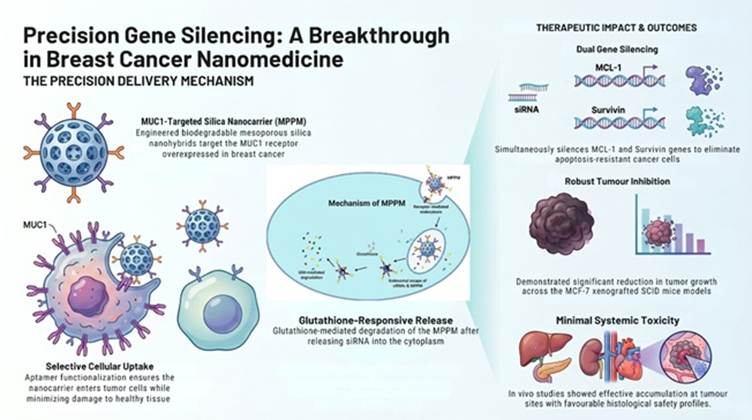
The nanomedicine is designed to overcome one of the major challenges in cancer treatment—delivering gene-silencing therapies safely and efficiently to diseased cells while minimizing damage to healthy tissues. By protecting therapeutic cargo during circulation and ensuring targeted delivery, the technology enhances treatment effectiveness and reduces potential side effects.
In preclinical studies, the platform successfully suppressed the activity of critical cancer-driving genes, leading to reduced tumour growth and improved treatment outcomes. The targeted approach enables researchers to address cancers driven by genetic mutations that are often difficult to treat using conventional therapies.
Scientists say the technology could be adapted to target a wide range of cancer types by customizing the therapeutic payload to silence different disease-causing genes. The versatility of the platform also offers potential applications in treating other disorders linked to abnormal gene expression.
The breakthrough highlights the growing role of nanotechnology in modern medicine, particularly in the development of precision therapies that act at the molecular level. Researchers believe that with further validation and clinical testing, the nanomedicine could pave the way for more effective, personalized cancer treatments in the future.
The study represents an important step toward harnessing advanced nanocarriers to selectively disable the genetic mechanisms that drive cancer, offering fresh hope for patients facing aggressive and treatment-resistant forms of the disease.