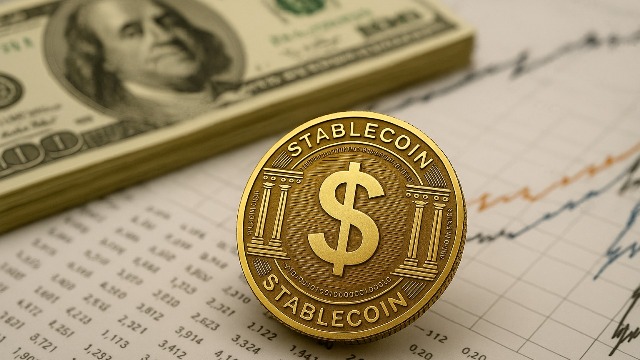
Every year, the Bank for International Settlements (BIS) assesses how money has or is changing. In its latest Annual Economic Report, it dedicates a chapter to a fast-growing form of digital money called the stablecoin. In this chapter, the BIS asks a simple yet powerful question: can stablecoins be trusted in the same way as ordinary money?
To answer this question, the report explains what makes money work at all. It notes that when someone hands you a hundred-rupee note, you accept it without hesitation. There is no doubt in your mind about its genuineness, because every rupee is worth exactly one rupee, guaranteed by the central bank—the Reserve Bank of India. The report describes this quiet and unquestionable trust in the rupee as the “singleness” of money and notes that this trust took centuries to build.
On the other hand, a stablecoin is a digital token that promises to always be worth a fixed amount, usually one US dollar. Unlike the ordinary money in your bank account, it is issued by private companies and is exchanged on public blockchains, which are open digital networks that anyone in the world can use. Today, more than 99 out of every 100 stablecoins are tied to the US dollar.
The appeal of stablecoins is undeniable. They can move across the world in seconds, at any hour, and can be programmed to follow instructions automatically. For example, a payment can be released to a vendor only after the goods have been delivered. However, the report warns that stablecoins fall short of the trust ordinary money enjoys. It notes that the promised value of stablecoins sometimes wobbles: a stablecoin meant to equal one dollar may briefly trade for slightly less. Additionally, because they are exchanged on open networks with limited checks, they are attractive to criminals and harder to monitor for money laundering.
The report particularly warns countries like India. It notes that the countries with shaky local currency are more prone to see a rise in stablecoin adoption by their people. It has been observed that people in such countries begin to save in dollar-linked stablecoins, which act as a digital version of keeping dollars under the mattress, except that they are instant and can slip past a country's capital controls. If this practice spreads, the report warns of stablecoin dollarisation of the economy. This means that money can be pulled out of a country in an instant, putting pressure on the local currency and weakening the central bank's ability to steer its own economy. Additionally, if many people shift their savings from banks into stablecoins, banks would have less money to lend, which could make loans more expensive.
So what does the report suggest? Crucially, it does not call for restricting the use of stablecoins. Instead, it argues that rules governing stablecoins should be tightened so that users are protected and the risks are contained. It also notes that the genuine benefits of stablecoins, such as speed and programmability, should be brought into the trusted banking system itself, anchored by central bank money. The deeper message of the report is a reminder that money is far more than a piece of technology; it is a hard-won institution built on trust. Any new technology must strengthen that trust rather than quietly chip away at it. For India, as it weighs how to handle digital assets, it is a timely word of caution.