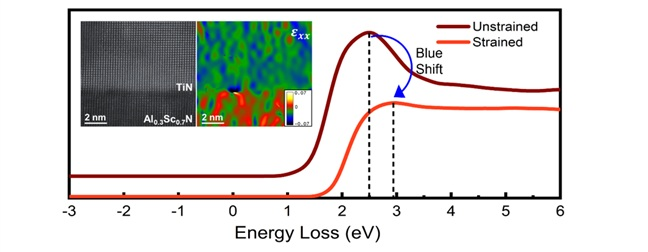
The study demonstrates that the optical response of metals, traditionally considered fixed, can be modified in a controlled manner. This capability could facilitate the design of reconfigurable nanophotonic components that can be programmed to perform different functions without requiring physical changes to the device.
The innovation has significant implications for applications such as optical communications, high-resolution imaging, sensing, quantum technologies, information processing and integrated photonic circuits. Programmable nanophotonic devices based on this approach could offer improved performance, greater flexibility and enhanced energy efficiency.
Researchers believe the findings represent an important step towards adaptive photonic systems capable of manipulating light on demand, accelerating the development of compact, multifunctional and next-generation optoelectronic technologies.